Silent Hill (2006)
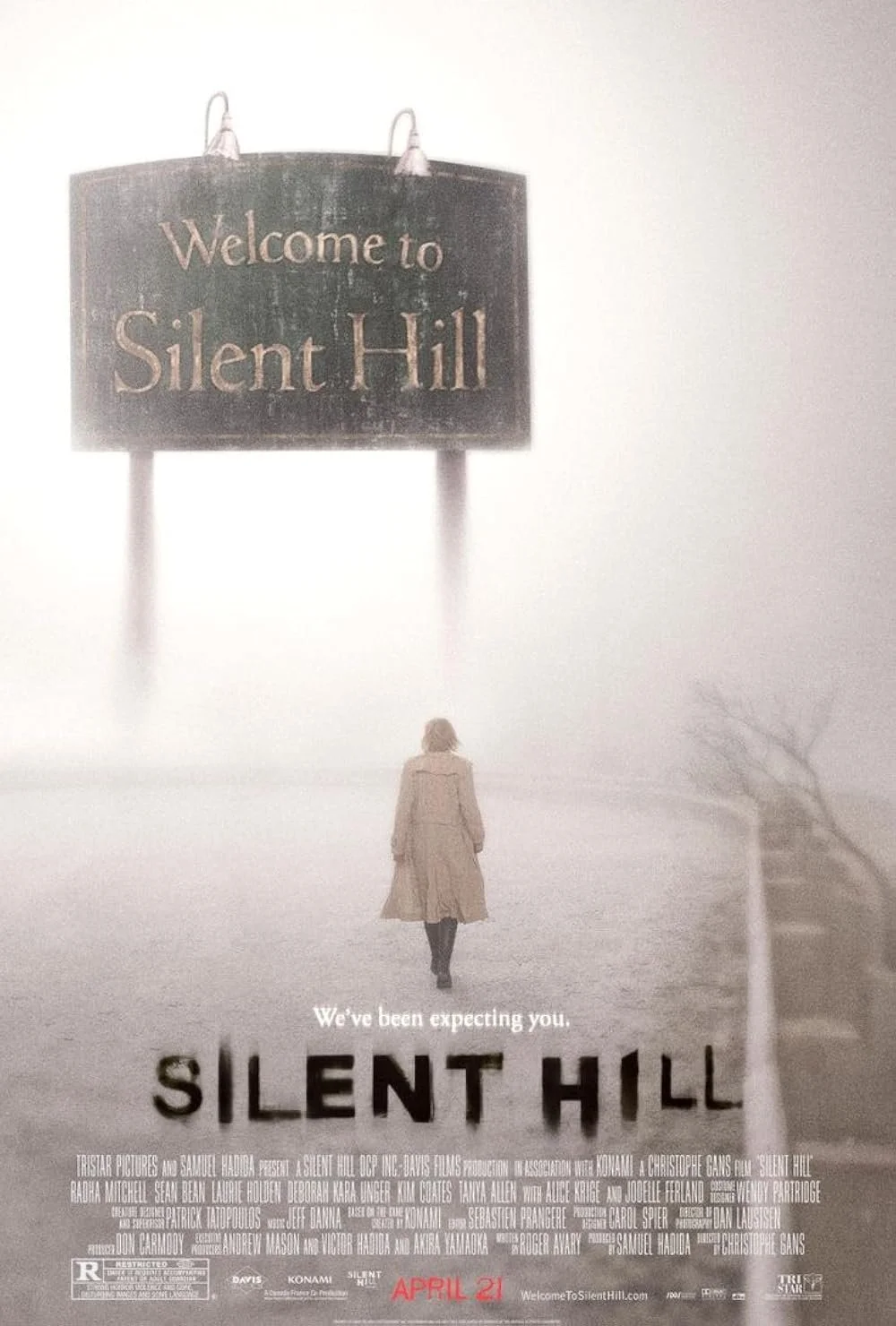
Silent Hill: Better Than It Should Be | 3.5/5
Written by Noah Dietz: 1/31/2026
After seeing Return To Silent Hill last week I thought it would be a good idea to revisit the film that I felt was the best of the trilogy. My friends had talked about their feelings on this and Silent Hill: Revelation 3D, voicing the opinion that all of them were of equally poor quality across the board. While I’ve admitted to having a soft spot for the second film, I’ve maintained Silent Hill is a legitimately decent entry, in addition to being something that’s an actually compelling adaptation of the source material.
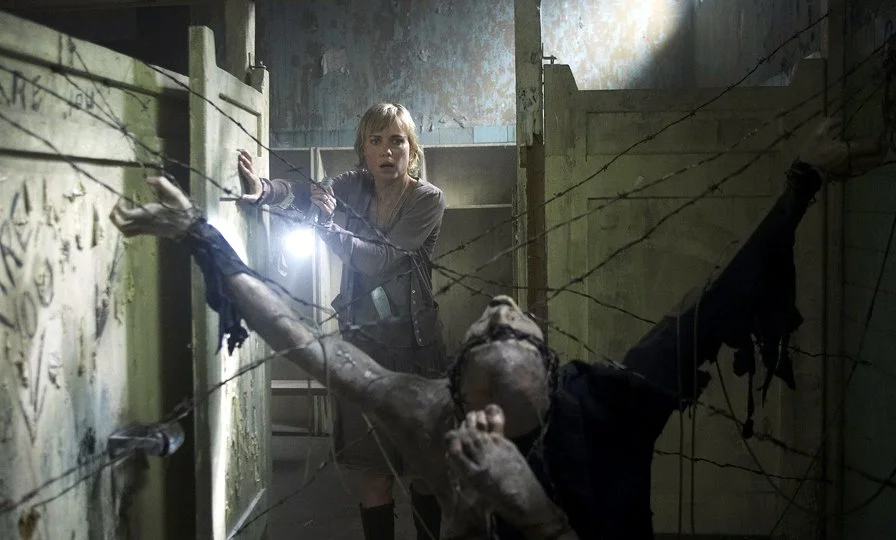
Silent Hill opens with Rose (Radha Mitchell) and Chris (Sean Bean) looking for their adopted daughter Sharon (Jodelle Ferland). She has a history of sleepwalking episodes where she’ll scream about Silent Hill, a place neither of her parents are familiar with. Rose decides it's in Sharon’s best interest to go to the town and try to squash whatever is traumatizing her daughter. Arriving at Silent Hill with police in pursuit, Rose crashes after seeing a child cross the road in front of her. With her daughter missing, ash falling from the sky, and the fog creeping in, Rose makes her way into the titular town. While traveling through the ruins she slips between the nightmare world and the fog world, treating us to shots that are reminiscent of scenes from the games. Jumping between the hotel and the building where the cult did ritual work calls to mind James stepping between apartment buildings in Silent Hill 2. The corpse of Colin the janitor calling to mind the cruciform bathroom corpse Harry Mason finds in the original game. There are a lot of moments where we’re asked to stop and look, highlighting images and sequences that are meant to evoke the games. As far as atmosphere goes, Silent Hill manages the difficult task of conveying a compelling visual take on the town so many people were conceptually familiar with.
Silent Hill’s decision to change the falling snow into ash is what perpetuated the myth that Silent Hill was based on Centralia, Pennsylvania. While not part of the original world design, this is one of the changes made to the story that helped cement the film as a distinct adaptation. In a world of ash and fog, the change to the nightmare world filled with rust and industrial construction feels natural. Other decisions, unfortunately, do make less sense. Changing Deborah Kara Unger’s character, Dahlia, into the downtrodden mother of Alessa (also played by Jodelle Ferland) rather than leaving her as the mystical figurehead of the cult that operates within Silent Hill is a confusing choice. While not as much of an adaptational sin as Gans’s decision to make James Sunderland the “long-suffering but ultimately pure of heart boyfriend,” putting her in the backseat to Alice Krige’s Christabella in a christianity-aligned cult is confusing, to say the least. It’s clear that he resonates with the original cult’s inclusion in the world, especially seeing as he’s added them as a major player in his new film. With that said, changing the cult’s primary mission and reducing Dahlia from their leader to a simple member of the town feels like a change made with only subverting established expectations in mind. However, coupling that with Pyramid Head changing from a demon conjured by James’s psyche into “the guardian of Alessa” cleanly locks in this specific world’s state compared to the source. It’s here, it’s different, and it’s not afraid to pull whatever it needs to show that.
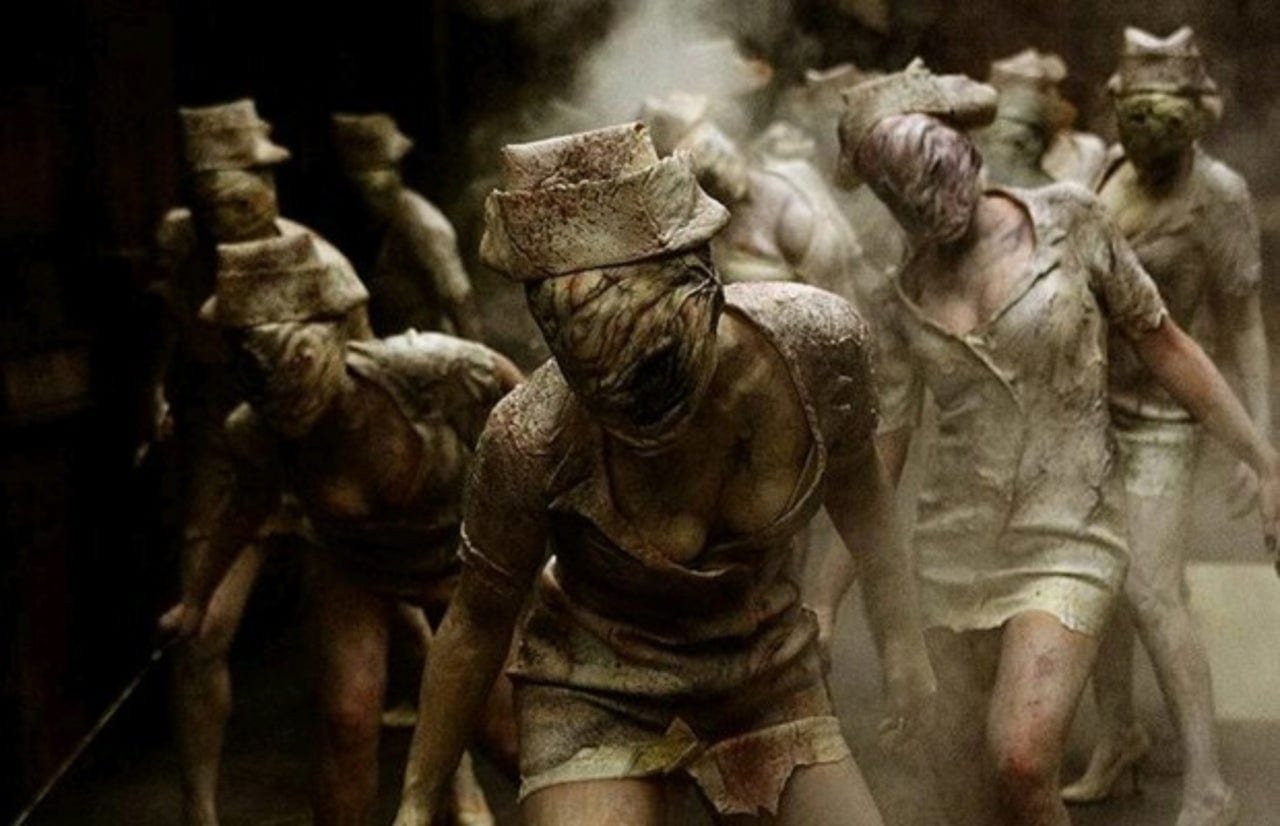
I would like to say, I don't think all the changes are inherently bad things. If a consistent team had been maintained throughout these three films, there’s even a chance we’d have a passable adaptation of the world ahead of us. While not true to the world of the games, it’s hard to argue that certain images like the nurses and Pyramid Head are entwined parts of the people’s connection to the media. If changes are being made with mostly base references to the games, it at least can create a compelling world for the films to exist in. A place with their own internal canon that can embody the spirit and atmosphere of the games, even if a little contradictory to the source details.
To come back to the virtues of the film, I think it looks great all said and done. With the exception of the confusing commitment to an extended flashback sequence drowning in heavy artificial film grain, a majority of the film manages to stick the landing. The CG effects can be a little rough, but I didn’t find them to be all too egregious compared to similar budgets of the era. Moments where the fake fog can be a little too visible are contrasted with sets that have a real depth and texture that isn’t as commonly found in similar adaptations today. The nightmare world is home to a slew of wonderful sets and locations, while the real world gives us just enough of a sense of normalcy to ground us. There are two shots I keep coming back to in the beginning of this film. A long shot down an alleyway where Rose and Alessa both run up, and a stairway plunging into a dark alley between two buildings that Rose starts to walk down before the world changes. The first showcased a depth that blew me away when I was reminded it existed, and the second gripped me, even just for a second with a deep, foreboding fear. By no means a perfect film, but one that generally does deliver on what it promises without too many caveats.
I never want to say “this is for the fans, other people just don’t get it.” I think that’s a cheap defense of a thing that infantilizes the fanbase and reduces the value of the art on hand. That said, legitimately I do partially feel that way about video game flicks sometimes. This primarily speaks to the general opinion that video games are a lesser artform, and by default anything based on one must be too. Silent Hill, as a spiritual adaptation, is honestly not too awful. When compared to the Resident Evil films that immediately departed from any form of structure resembling the games (a surprisingly solid decision, all things considered), the inept Hitman movies that are closer to an incredibly bad James Bond/John Wick ripoff than anything, or the absolutely baffling Need For Speed that cashes in on a name only, Silent Hill at least manages to maintain a sort of energy that one can respect. It can certainly be argued that we could be truer to the source, but it’s far from the worst video game adaptations we’ve had. There are a few too many scenes that exist to say “I remember that from the game” to be sure, but spreading them between enough other good moments ensure that they aren’t as heinous as others.
I went back to Silent Hill in an intentional attempt to do away with the rose-colored glasses I know I’ve viewed the film with in the past. I’m happy to say I still did enjoy the film on a return viewing. Its flaws exist, but I still found it to be an enjoyable experience that manages to feel like a real film without alienating its fans, and vice versa.