undertone (2026)
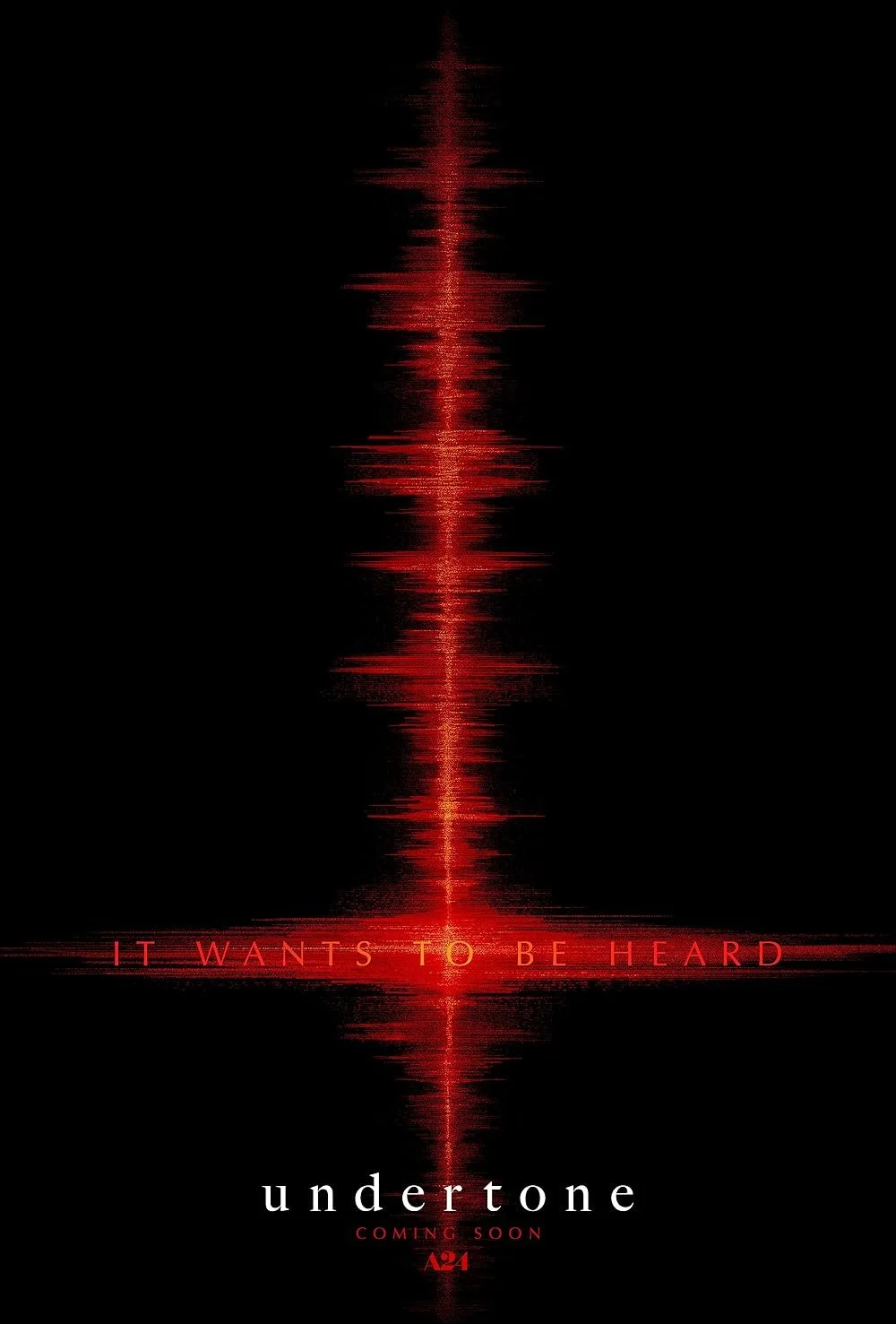
undertone: Too detail focused for the big picture
Written by Noah Dietz: 3/14/2026
As a man who has voluntarily started not one, but three different podcasts over his brief life on the internet, I was really excited to see what was happening with undertone. I love working with audio files and I love audio design as a field. Frankly, there was nothing in the advertising that made me think this film would be anything short of “extremely tailor made for me.” The film was pitched to me in the Letterboxd summary as “The host of a popular paranormal podcast becomes haunted by terrifying recordings mysteriously sent her way.” Deadline described it as “The Blair Witch of audio horror,” and Collider boldly dubbed it “The scariest movie you’ll ever hear.” I try not to let advertising get to me too heavily—especially pull quotes that sound like they’re promoting the newest middle-of-the-road horror that Netflix is peddling—but I can’t pretend that I wasn’t going in with my hopes a little high.
Frustratingly, this is not a great film.
I was invested in our setup. Evy (Nina Kiri) is taking care of her dying mother as a 24/7 live-in aide. She’s been told by a nurse that her mom doesn’t have a lot of time left, and that she’s basically here waiting out the inevitable. The only source of respite we see her get is when she remotely records her paranormal podcast with her friend Justin (Adam DiMarco). Living in England and never to be seen on screen, he seems to be the only good friend that Evy has. Justin takes on the podcast role of believer to Evy’s skeptic. He excitedly shares a strange email they received containing ten audio files for them to dig into. These opening moments were where I initially really enjoyed the film. Not to be a person who points at the screen while clamoring to say “I know that!,” but getting to see their little podcast setup was something that I felt very comfortable and at home in. The trappings of this part of the film, with the notable exception of them only seeming to record for six minutes at a given time at first, were true to life for me. Additionally, I really enjoyed the creepypasta energy that we got from the brief mention of a previous episode. For a brief moment, I thought that I would happily listen to the Undertone Podcast if it was real. I felt like things worked, but these scenes were punctuated by increasingly strange events involving Evy’s mother.
Those moments are where most of the film spends its time, as well as where I feel it’s the most lacking. I loved listening to Evy and Justin play back audio snippets, trying to see if they actually say something while played backward or not. I did not much care for the time when Evy was shown caring for her ailing mother. I do feel a little bad about that to a point, because this is the most personal part of the story for director and writer Ian Tuason. According to him, much of the film was written while he was caring for his ailing parents, tapping into the feelings of caregiver burnout and the attached guilt that comes with that. This is something that becomes overly apparent when you’re aware of this detail. Nina Kiri manages to convey Evy’s exhaustion incredibly well, but it ends up feeling like we have two different films fighting with each other. We get one movie about haunted audio, and another about paranormal happenings surrounding a dying mother. I can’t help but feel Tuason’s personal experience partially got in the way here.
I feel it would be unkind of me to review this film without talking about the sound design. The choice to play up the ambient sounds of the house just until Evy put on her headphones is the kind of fun detail I was expecting. The ticking of the clock just behind her gets louder and louder up until the headphones touch her ears. The hard cut to a smooth silence with just the noise from her call with Justin is fantastic. The sound design for the film is so good that, when it becomes another tool for scares at the end by just including noises that are loud I almost felt personally offended. How can a creator go from making carefully constructed soundscapes that do more to lift the tension of a scene than any of the gloomy shots of the house ever manage to do? I knew I was going to be blasted by incredibly loud static and audio distortion at least a few times over the film, but to have the closing seven or eight minutes just be an auditory hell was a little much.
This brings me to the third act, which is where the film falls apart for me the most. After spending our first hour slowly and methodically moving through the house, our finale is more of the same with a fresh coat of “louder noises.” Tuason’s previous experience in the world of VR is apparent here, with a clear desire to show off the background whenever possible. The intent to make the audience feel there is something hiding in the background is a tried and true method, if a little by the books. However, to make this work out and actually build tension, there are times you do have to show something. There were a lot of moments where the slow spin around a room made me wonder if there was going to be something there, but with how dark a majority of the shots were I was never sure if there actually was something there or not. This isn’t even one of my major issues, I think this movie was generally well lit for a “dark movie,” but I couldn’t help but roll my eyes during the finale when we got a full spin around the living room recording space just to see the lamp across the room flicker for the third or fourth time.
By the end of the film we’re drowning in confusing religious symbology and a strangely pro-life story that has little to do with the originally promised premise of haunted audio. In an interview with inreviewonline Tuason says a lot about his story and process, but this was my most negative takeaway. “I wanted to find a demon from ancient folklore that killed children. The idea was that Evy doesn’t want to have a child, and maybe she’s unconsciously summoning this demon to take away this burden that she has.” Combining this with moments in the film that push the narrative that “all pro-choice women want their friends to get abortions,” and it’s hard to not have the film leave a bit of a sour taste in my mouth.
Leaving the theater this afternoon, it was hard not to feel like undertone was a movie that thought itself above the clichés and tropes it was drowning in. I’m not sitting here and saying that the film is bad because it tangentially includes a plot point that I personally disagree with. I will say, however, that the film never manages to glue its competing halves together in a way I was ever able to find more than passingly fun. It’s unfortunate all the hallmarks of a film that’s best built for a middling streaming release are here, just with better lighting than most. Maybe you’ll enjoy this—many of my peers and critics I look up to did—but I couldn’t help but wish it had been something more.
Rating: 2.5/5
For a film that revels in the level of minuscule audio detail to the level that undertone does, it's truly a shame that the greater film never comes together in a meaningful way.
Film: undertone
Director: Ian Tuason
Writer: Ian Tuason
Release Year: 2026